 sales@winsell.cc


 2026-01-21
Casings fall into two categories: natural casings and artificial casings.
Natural casings mainly use animal intestines, the most commonly used is pig intestines, cattle intestines, sheep intestines.
Advantages of natural casings: edible, good taste, breathable, good toughness, good shrinkage and expansion of elasticity, the best short-term use.
Disadvantages of natural casings: not suitable for long time preservation, easy to breed bacteria, diameter is not uniform, less output, not suitable for factory mass production.
Artificial casings: cellulose casing, plastic casing, collagen casing, fiber casing, etc.
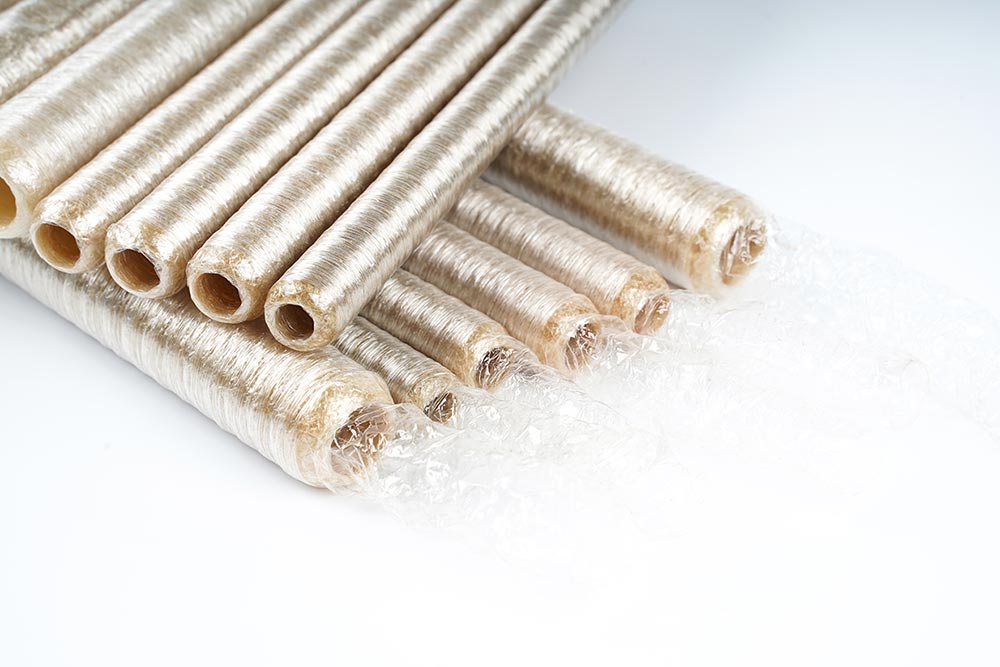
Advantages of cellulose casings: Cellulose casings are made from natural fibers such as lint, wood chips, flax, and other plant fibers. It is characterized by good toughness and air permeability, but it is not edible and cannot shrink with the meat. Cellulose casings are also stable to rapid heat treatment and can be smoked even when wet.
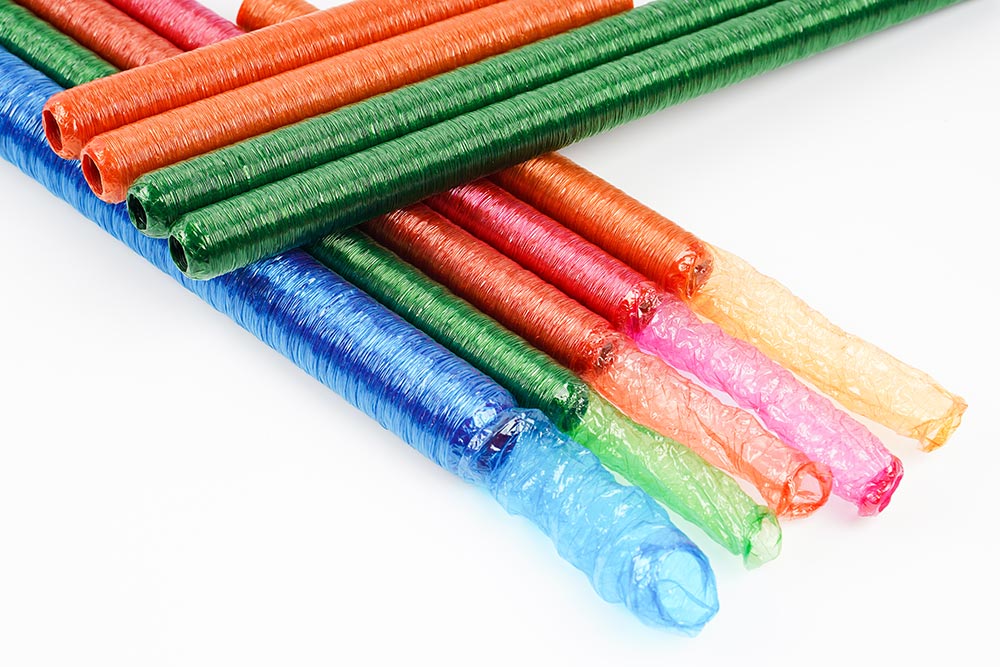
Characteristics of cellulose casings: Not edible. With toughness, shrinkage and coloring, uniform specifications, health, breathable, smokeable, surface can be printed. Small diameter cellulose casings are mainly used to make sausage without casings. After fumigation, cold water is sprayed to cool down, and the casings are removed and then sold in secondary packaging. Big diameter cellulose casings can produce and process smoked flavor ham. After smoking and cooling, the casing is not removed, and the second packaging is directly sold.
 Return to the list